ServicesWhole Home Water Filtration
Whole Home Water Filtration in West Rancho Dominguez
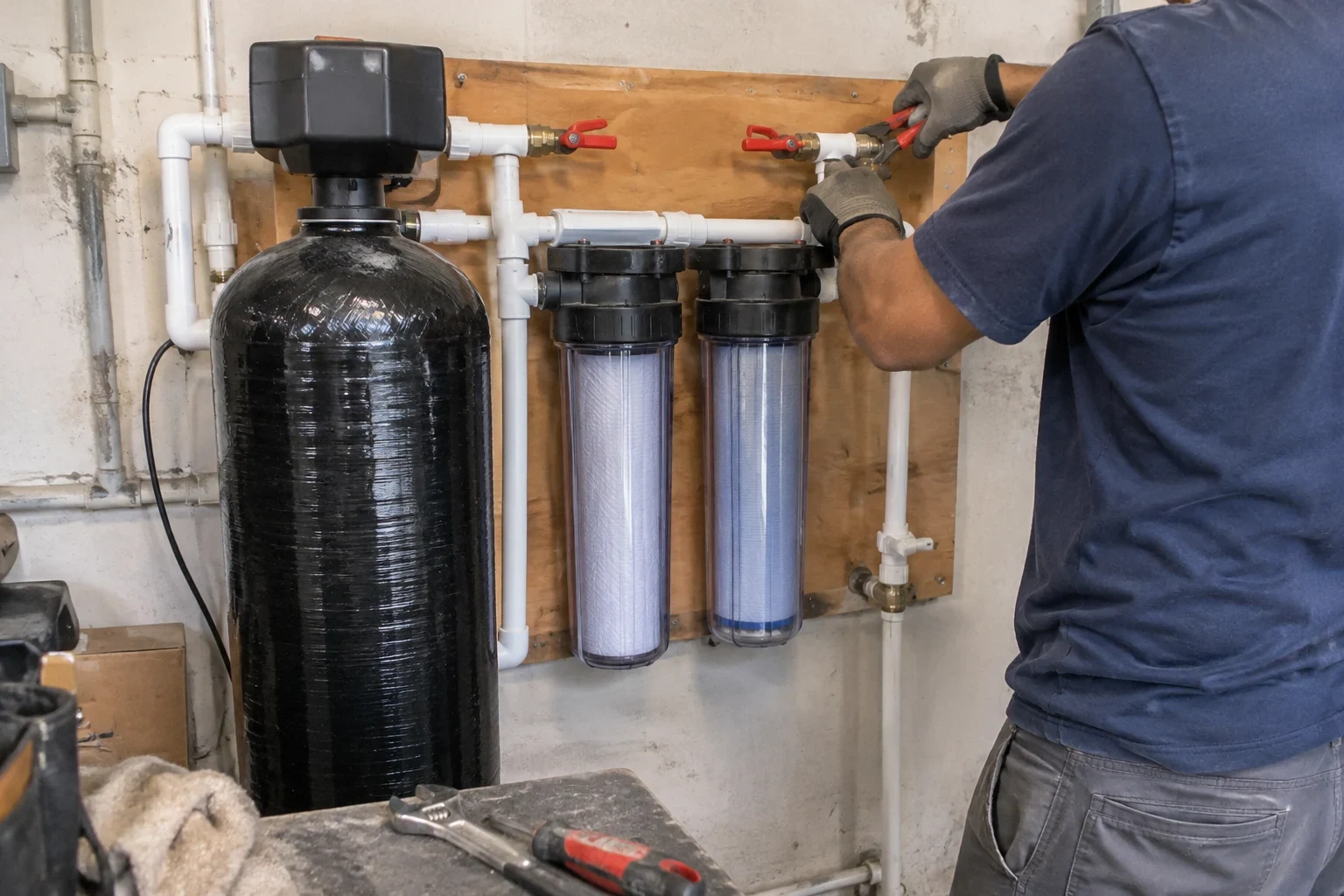
This system treats your water at the main line, before it splits off to the kitchen, the showers and the washer, so every tap gets the same filtered water. First we look over your plumbing and what's coming through it, then we tell you straight whether a whole home setup makes sense.
What a whole home system does
The filter mounts on your main water line, most often right after it enters the house or close to the water heater. Nothing reaches a sink, shower or appliance without going through it first. A typical setup has a sediment stage that traps sand and rust flakes, followed by a carbon stage that knocks down chlorine taste and odor.
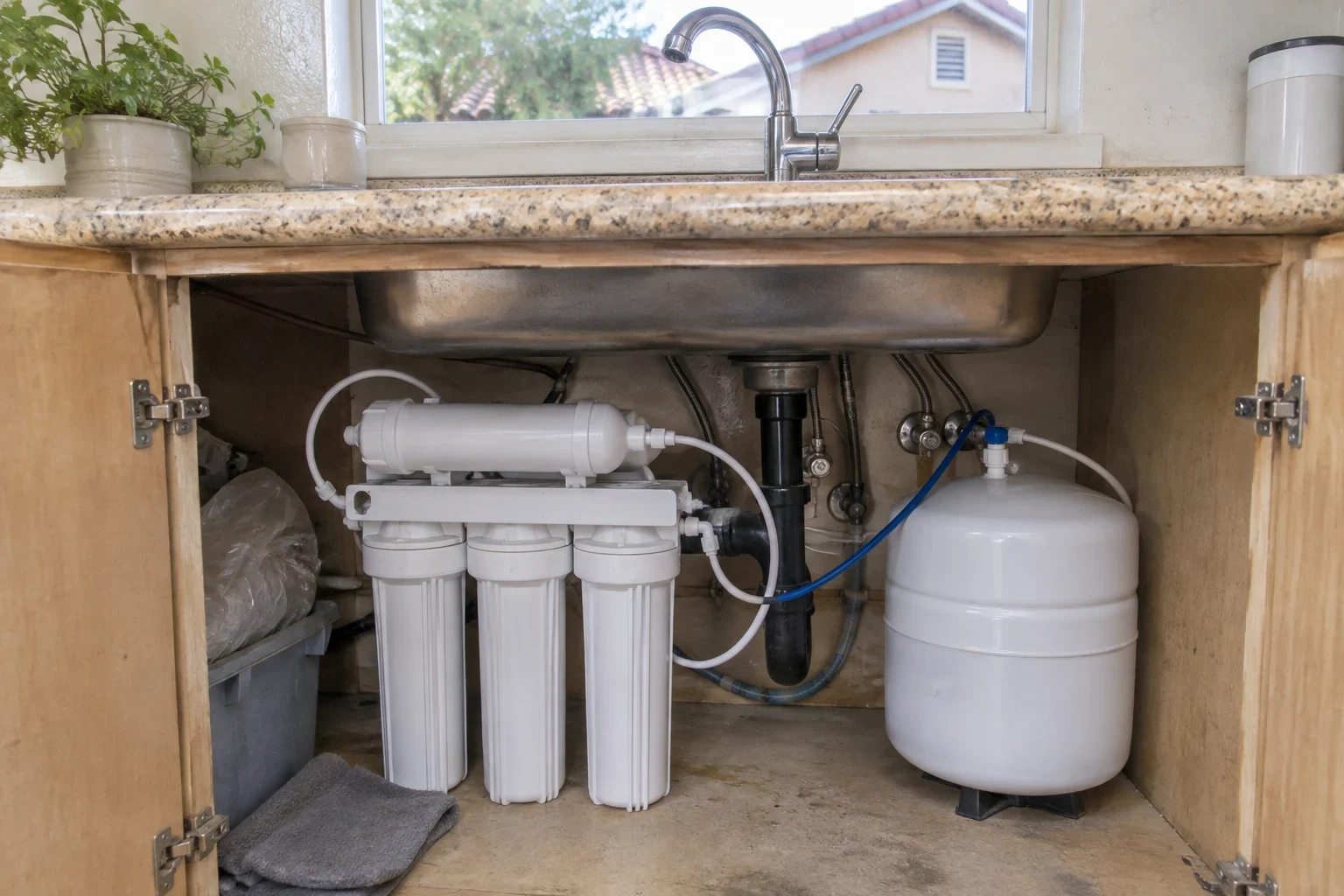
It's the right call when the trouble is in every room: the shower smells of chlorine, aerators fill with grit, and the bathroom sink tastes off just like the kitchen. If drinking water is your only concern, a reverse osmosis unit under the sink may cost you less. You'll hear that from us before any sales talk.
We offer free install (we cover the cost). You pay for the system itself, and we go over that number on paper before we start any work.
What the job includes
- A look at your main line
- We find your main shutoff, check the pipe material and size, and note your water pressure. We also look for a spot where the system fits with room to change filters.
- Plain findings first
- You hear what we saw and what it means in everyday words. Sometimes the answer is a whole home system. Sometimes city water filtration or a single reverse osmosis unit fits your home better, and we say so.
- Sized for your flow
- A filter that is too small drops your pressure when two showers and the washer run at once. We size the housing and media to how many bathrooms and people you have.
- Bypass valve and shutoffs
- We plumb in a bypass so you can change filters or service the system without losing water to the house.
- Clean install
- We lay down drop cloths, flush the new filters, check every joint for leaks and take our packaging and old pipe with us.
Clues that every tap in your home needs filtering
Showers that smell like chlorine
A chlorine smell in a steamy bathroom is one of the complaints we hear most. A carbon stage at the point where water comes in removes most of it before any shower or faucet.
Sand in faucet screens and toilet tanks
Grit or dark flecks building up in aerators mean sediment is traveling through your lines. A sediment stage stops it before it gets to your fixtures and appliances.
Brownish water first thing in the day
Corroding galvanized pipe gives off rust, and many homes still have some in the walls. A filter clears the water, and our inspection shows whether the pipe needs work too.
Filters everywhere to keep up with
If you're changing filters in the fridge, a pitcher and the showerhead, one system on the main line can cover the whole house. You buy fewer cartridges and track fewer change dates.
Off taste at every faucet
If the bathroom tap tastes as bad as the kitchen one, no single fixture is to blame. The problem is the water entering your home.
How the work goes
- 1
Phone call
You describe what you're seeing or smelling, and we pick a visit time that fits your week.
- 2
Inspection at your home
We trace the plumbing from the main line inward, take a pressure reading and check fixtures and the water heater. You're welcome to look along with us.
- 3
Findings and a written quote
We go over what turned up and what we'd suggest, if anything at all. The quote lists each line item so you know where every dollar goes.
- 4
Install day
The water gets turned off, we open the main line, mount the housings and plumb in a bypass loop. The house is without water only during the tie-in.
- 5
Flush and walkthrough
We run water through the new cartridges, look over every joint for drips, check pressure at a few faucets and show you when and how to swap filters.
What moves the price
Since we cover the install, most of your cost is the system and its filters. The rest depends on what we find at your main line. You get the full number in writing after the inspection, not before.
- System size
- Bigger households and more bathrooms need larger housings or tanks to keep pressure up. That costs more than a small single-stage unit.
- Filter stages
- A sediment-only system costs less than one with sediment plus carbon. We only add stages your water actually needs.
- Where the line is
- A main line in an open garage is easy. One buried along a stucco wall or under a slab takes more fittings and more pipe.
- Condition of your pipes
- Corroded galvanized fittings at the tie-in point sometimes need replacing so the new system seals right. We show you before we touch them.
- Ongoing filter changes
- Cartridges wear out on a schedule set by your water use. We tell you up front what replacements cost and how often you will need them.
Questions about whole home filtration
Something not covered here? (310) 807-6922
Does filtering the main line cut my water pressure?
Not by much if the system is the right size. Weak pressure after an install usually means the filter was too small or a cartridge is clogged. We measure your pressure on the visit and again once the system is running, so you can compare the numbers yourself.
Will I still want a separate filter for drinking water?
Often you won't. Carbon on the main line takes care of taste and smell for most families. If you want another layer for drinking and cooking, an under-sink reverse osmosis unit can run alongside the main system.
Where will you put the system?
We keep it near the main line, which usually means the garage, a utility closet or an outside wall. If it goes outdoors, it needs a cover to keep direct sun off the housings. You help choose the spot when we come out to look.
Does this stop the white spots on my fixtures?
No. Sediment and carbon filters leave the dissolved minerals that cause scale in the water. We'll tell you plainly what a whole home system changes and what it leaves alone, so nothing catches you off guard.
What do I actually pay for if the install is free?
We offer free install (we cover the cost). Your bill is the system plus any parts written on your quote. Nothing new gets added on install day unless you agree to it first.
How often will I swap filters?
The sediment cartridge usually needs changing first, and the carbon lasts longer. The real timing comes down to how much water your home goes through. After the walkthrough we leave you a short schedule to follow.
See what your water is doing first
Tell us what you are noticing at the tap. We will look at your plumbing, give you straight findings and only then talk about a system.