ServicesWell Water Filtration
Well Water Filtration in West Rancho Dominguez
Well water brings its own problems: grit in the lines, orange stains, a rotten egg smell. We look at your well setup and the water coming out of it first. Then we tell you plainly what we found and which filter fits.
What well water filtration does for your home
With a private well, nobody cleans the water upstream of you. What the ground puts in, your home gets. Most often that means sediment, dissolved iron, manganese or hydrogen sulfide gas. All of them are common, and each one calls for its own type of filter.
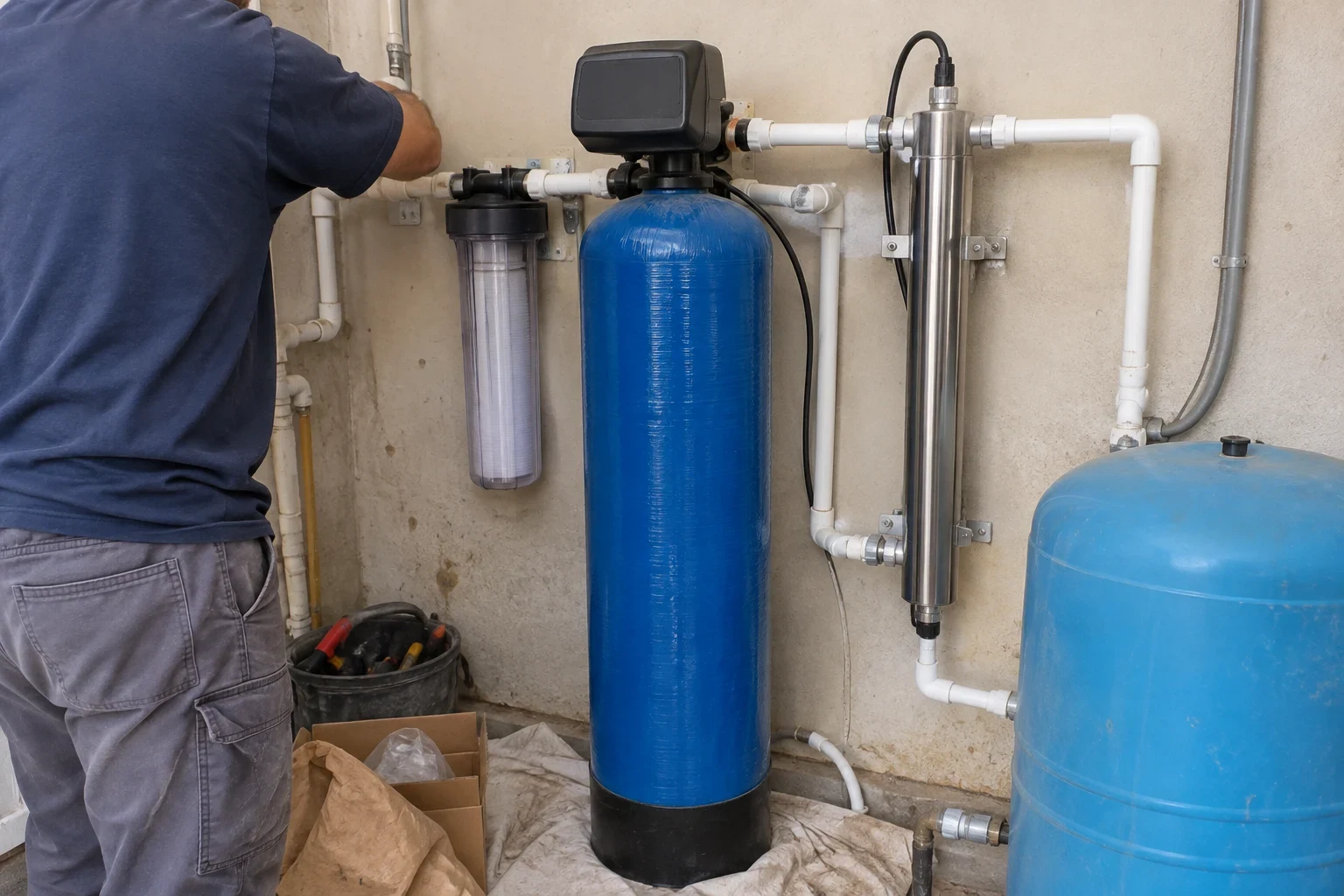
The filter mounts on the main line just past your pressure tank, so every faucet and fixture gets filtered water. A screen or cartridge stops the sediment. For iron and sulfur, a tank of media traps them, then rinses them out on a set schedule.
What we run into most is a filter bought for the wrong problem. Carbon cartridges do nothing for iron. Sediment filters do nothing for a sulfur smell. So we look first and recommend second.
What the job includes
- A look at your well equipment
- We go over the pressure tank, pressure switch and gauge, plus the pipe running into your home. Pipe size and condition matter, since they set where a filter can mount and how we connect it.
- Plain findings before anything else
- You hear what we saw, what it probably means and what it does not mean. If your water is fine without a filter, we tell you that.
- A filter matched to the problem
- Sediment, iron, manganese and sulfur each need their own kind of media. We choose the setup that handles what is really in your water.
- Bypass valve and tidy connections
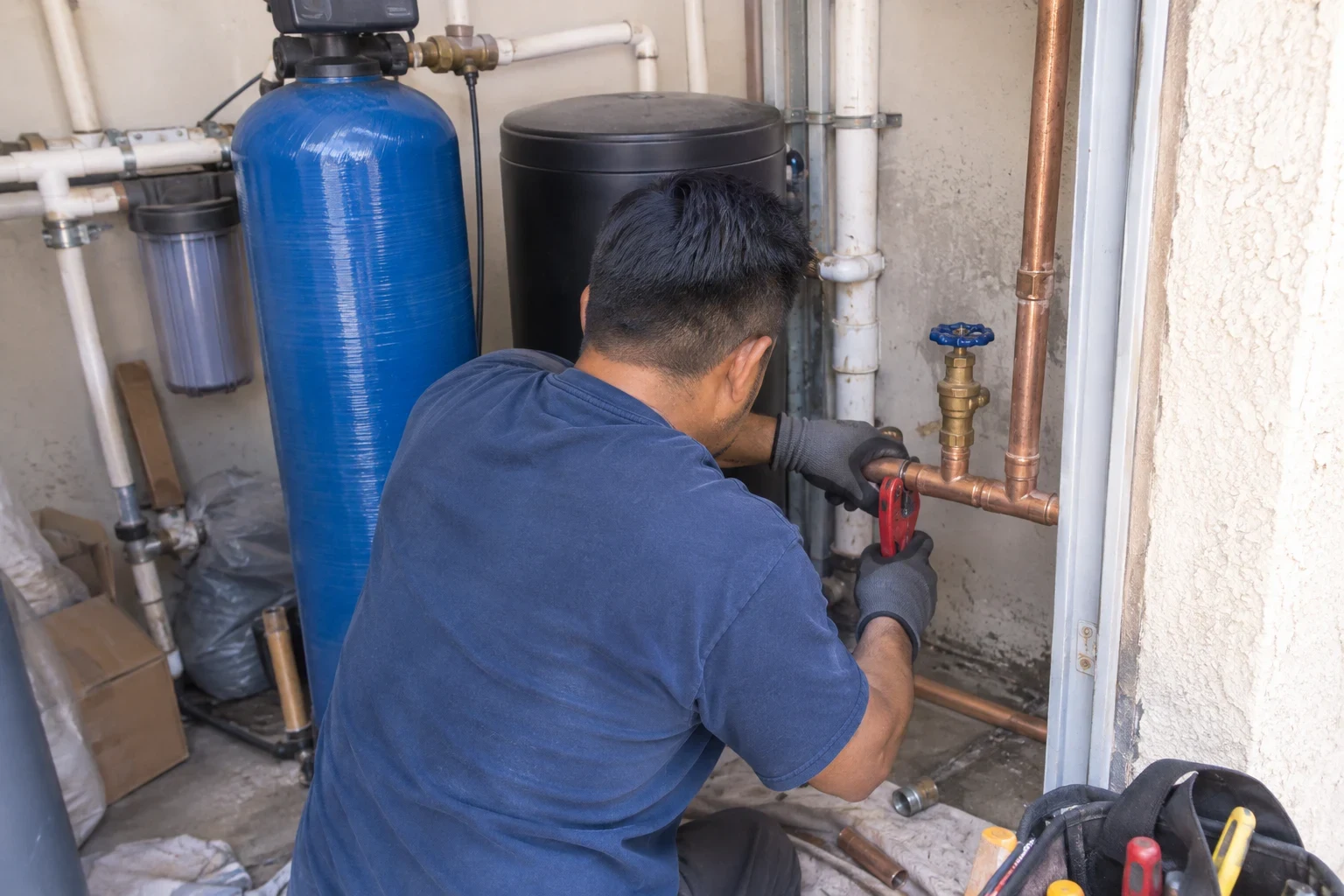
- We add a bypass on every install, so water keeps flowing to the house while the filter is being serviced. The plumbing is fitted snug and squared up, with space left so cartridge changes are easy down the road.
- Flush, startup and walkthrough
- We flush the new system, check pressure at a faucet and show you how backwash and cartridge changes work. You will know what to watch for before we leave.
Signs your well water needs a filter
Rotten egg smell
That smell is usually hydrogen sulfide gas. It is often worse on the hot side and first thing in the morning.
Orange or rust stains
Iron leaves reddish brown rings in toilets, sinks and tubs. It also stains laundry and can tint the water after it sits.
Black specks or gray staining
Dark spots on fixtures often point to manganese. It can build up inside pipes and stain white clothes.
Grit in aerators and screens
Sand and silt clog faucet aerators, wear out valves and settle in your water heater. If you keep cleaning screens, sediment is getting through.
Cloudy or off-color water
Water that looks hazy or turns color after standing in a glass is carrying something a filter can likely catch.
How a well filtration job goes
- 1
Talk it over by phone
You tell us what you are seeing and smelling, and where. We ask a few questions about your well and set a time to come out.
- 2
Inspection at your home
We look over your pressure tank, plumbing and fixtures, and check the water at a tap. Stains, smells and sediment all tell us something.
- 3
Findings and a recommendation
We explain what we found in plain words and which system fits. You get a clear picture of the equipment before any work starts.
- 4
Install and startup
We shut the water off, plumb in the filter and bypass, then turn it back on and flush. Most installs are done in a single visit, and we clean up the work area when we finish.
What moves the cost of well water filtration
Installation is free; we cover the cost. What you pay for is the equipment, and that depends on what your water needs. One sediment filter is a small job. Iron and sulfur together call for more.
- What is in the water
- Sediment alone takes a simple filter. Iron, manganese or sulfur need tank systems with special media, and a mix of problems may need two stages.
- How much water you use
- Bigger households and higher flow rates need larger tanks so pressure stays steady when showers and appliances run at once.
- Room and plumbing layout
- A clear wall near the pressure tank keeps things simple. Tight spaces or older pipe that needs changing add parts.
- Add-ons you choose
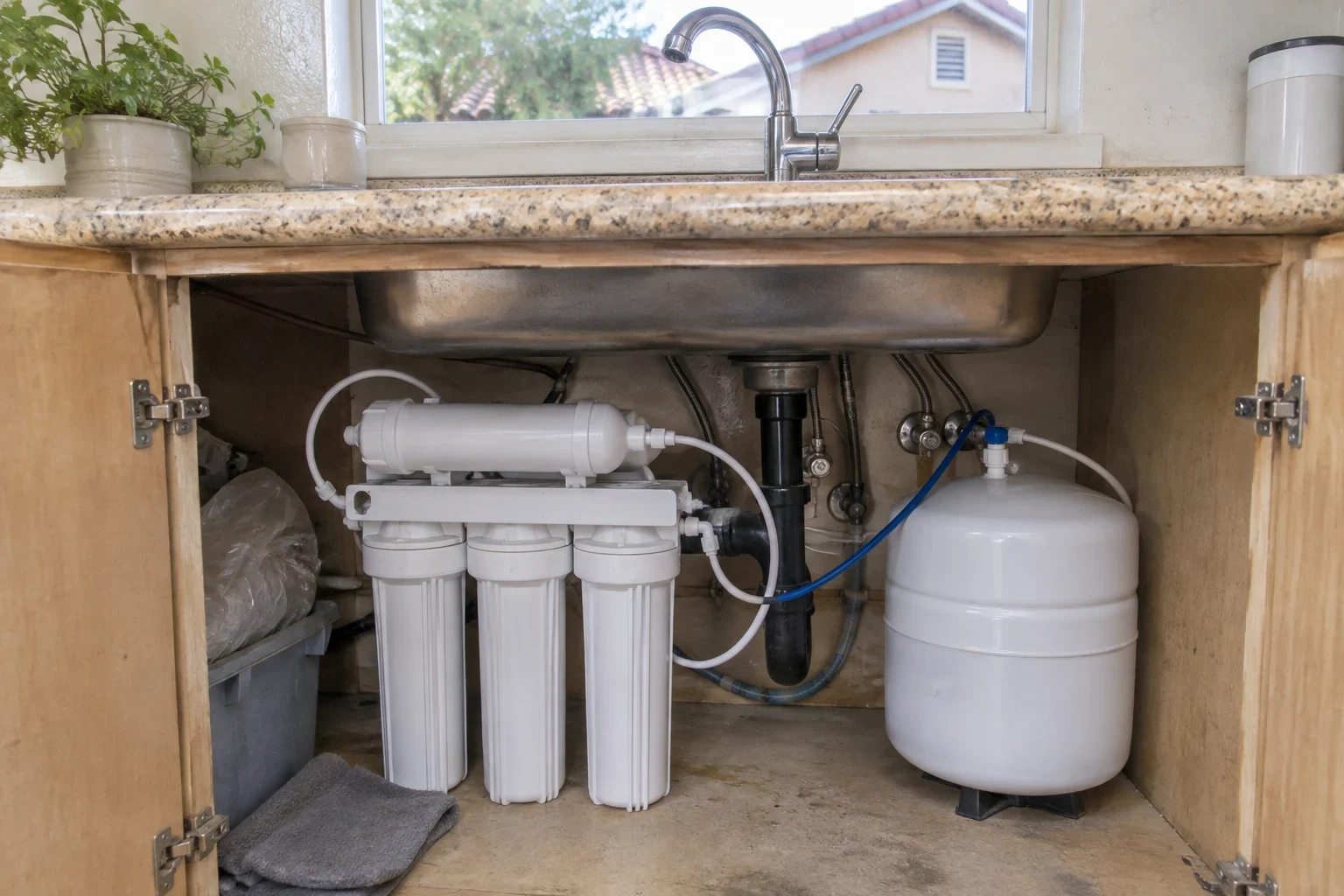
- Some homeowners add reverse osmosis under the kitchen sink for drinking water. That is a separate unit and priced on its own.
Common questions about well filters
Something not covered here? (310) 807-6922
Will a filter get rid of the sulfur odor from my well?
Usually, yes. A sulfur filter loaded with the right media removes hydrogen sulfide before the water gets to your faucets. If you only smell it on the hot side, the water heater could be the cause instead, and we will point that out during the inspection.
Does a well filter cut down my water pressure?
Not when it matches your flow. A pressure drop after an install almost always comes from an undersized unit or a cartridge that stayed in too long. We fit the system to how your household uses water and show you when each part needs changing.
What maintenance does a well filter take?
Sediment cartridges get replaced when they fill with grit, and the timing depends on how much your well pushes through. Tank systems backwash on their own schedule, so they ask little of you. We go over both with you before we leave.
Will a filter make my well water safe to drink?
These systems deal with sediment, iron, manganese and odor, the causes of off taste, stains and worn fixtures. For cleaner drinking and cooking water, many homeowners add a reverse osmosis unit under the kitchen sink.
Is there a charge for installation?
No. We cover the cost of the install, so it is free. You pay only for the equipment we suggest after the inspection.
Find out what your well water needs
We will look over your setup, tell you what we find and recommend only what fits. We work in West Rancho Dominguez and nearby towns like Compton, Carson and Paramount.