ServicesDual Tank Water Filtration
Dual Tank Water Filtration in West Rancho Dominguez
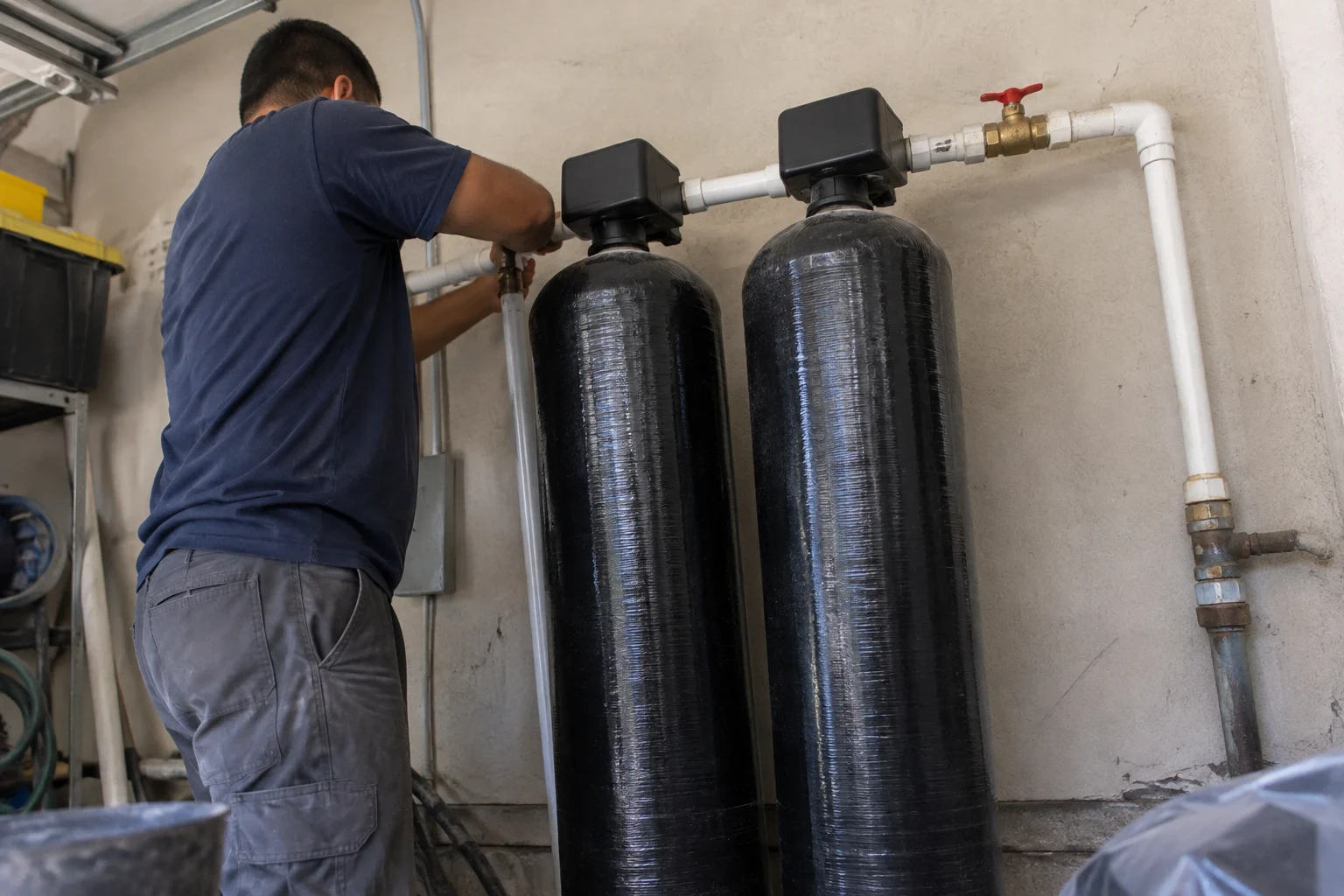
A dual tank system splits the work between two tanks. One cleans up chlorine taste and smell. The other handles the minerals that leave scale. We look at your plumbing and fixtures first, tell you what we see, and only then size a system for your home.
What a dual tank system does
Most dual tank setups pair a carbon tank with a second tank that uses salt to pull out hardness minerals. Water from the street runs through both before it reaches your faucets, shower and water heater. The result is water that smells less like a pool and fewer white crusts on fixtures and glass shower doors.
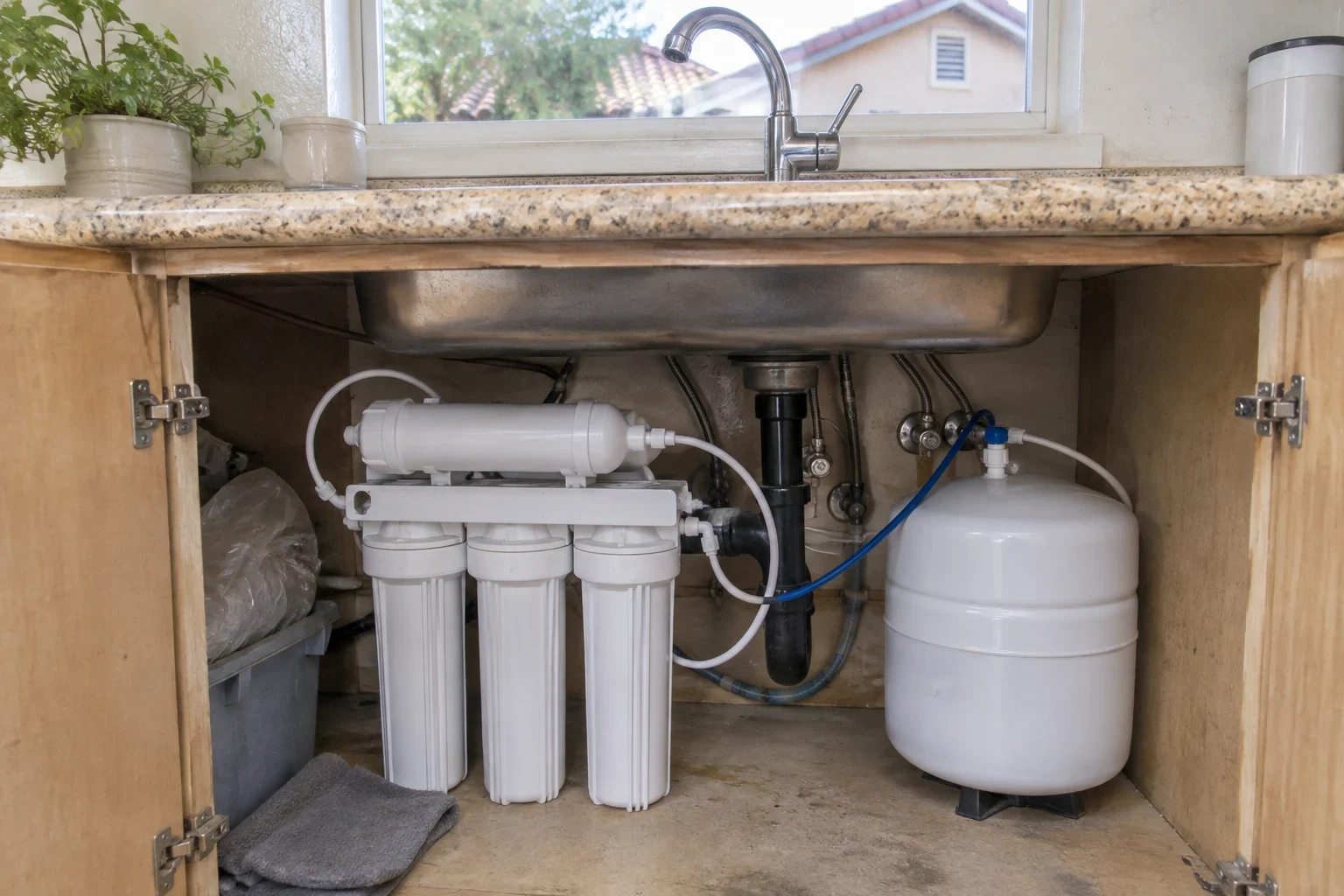
It is the right call when you see both problems at once. If your only concern is drinking water at the kitchen sink, a reverse osmosis unit under the sink may fit better. We will tell you that straight.
Plenty of homes across Los Angeles County show chalky spots on faucets and dishes. That is the kind of thing we look for on the visit, so the system we suggest matches what is actually going on in your home.
What the work includes
- 01
A look before any pitch
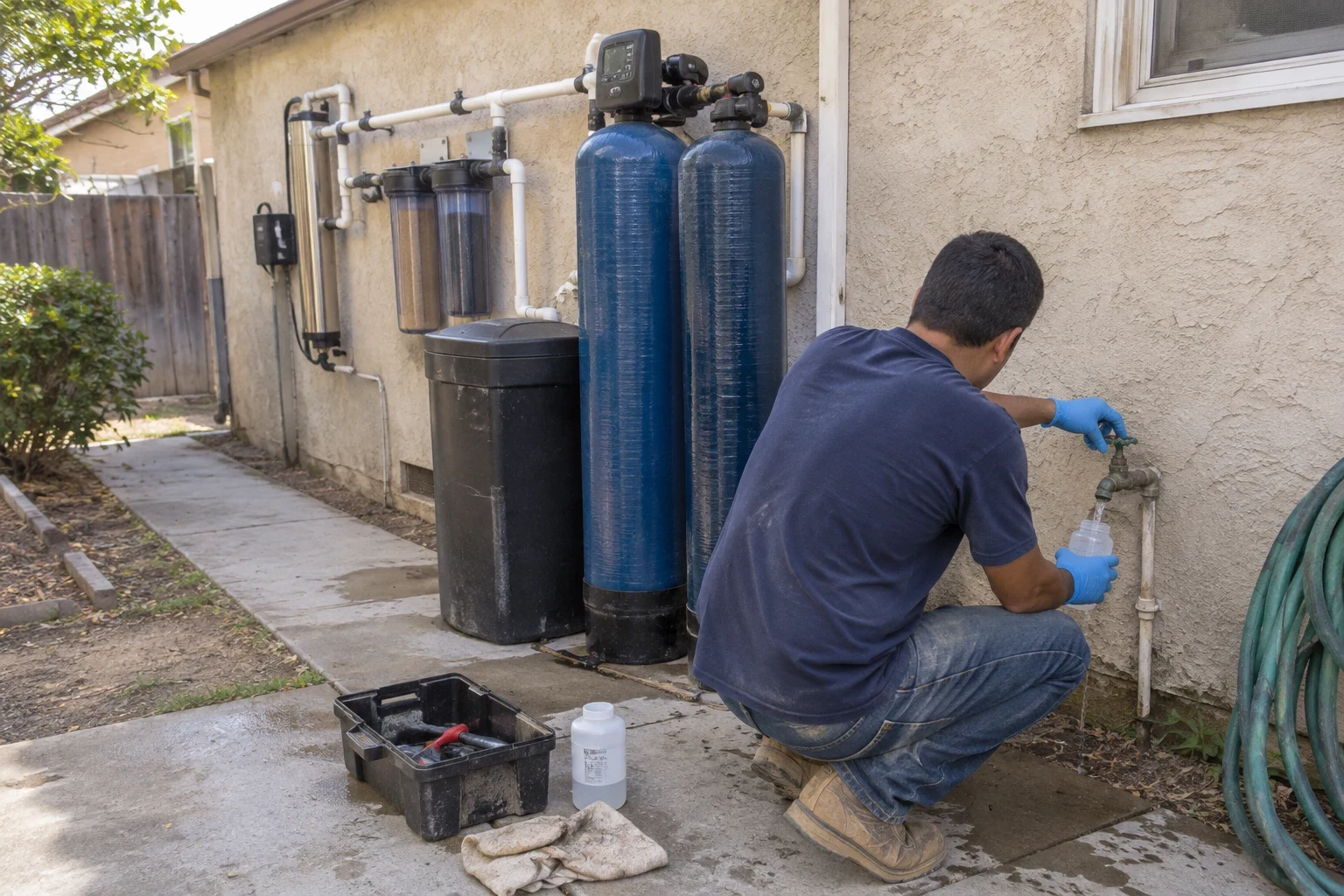
We check where water enters your home, the spot where the tanks would sit, your fixtures and the area around your water heater for scale. We read your water supplier's latest quality report with you. Then we explain what we found in plain words.
- 02
Carbon tank
The first tank holds carbon media that takes out chlorine taste and odor. It treats the water headed to the rest of your home, not just one tap.
- 03
Mineral tank and salt
The second tank uses salt to cut down the minerals behind scale and spotting. Free salt provided to tank upon install, so the system is ready to run the day we finish.
- 04
Bypass valve and hookup
We plumb in a bypass so you can take the system offline without shutting off water to the house. Fittings are matched to the pipe you have.
- 05
Drain line and settings
The mineral tank flushes itself on a schedule, so it needs a drain and usually an outlet. We run the drain line and set the control valve for the number of people in your home.
- 06
Hands-on lesson and a tidy space
You will pour in salt and flip the bypass yourself while we stand there, so it feels familiar later. Boxes, scrap pipe and old fittings go out with us, and the area gets wiped down.
Questions about Dual Tank Water Filtration?
Call(310) 807-6922Signs a dual tank system makes sense
White crust on faucets
Chalky buildup around faucets and showerheads is mineral scale. Wiping it off only lasts a few days.
Spotty dishes and glasses
Glassware comes out of the dishwasher cloudy or dotted, even with rinse aid.
Chlorine smell in the shower
Warm water releases chlorine as steam rises. A pool smell during a hot shower is a common first clue.
Popping water heater
Rumbling or popping from the tank can mean scale and sediment have settled on the bottom. That buildup makes the heater work harder.
Soap that won't lather
Shampoo and dish soap that take extra squirts to foam up point to hard minerals in the water.
From first call to running water
- 1
We talk it over
Let us know what you have noticed, how many people share the house and where the main line comes in, if you know. Then we pick a day for the visit.
- 2
Inspection and plain findings
We walk the house and the hookup area and show you what we found. If a dual tank system is not the right fit, we say so and tell you what is.
- 3
Install day
We let you know before we shut off the water at the main. Then we cut into the line, set the tanks on a level spot, add the bypass and run the drain. Water is off for part of the visit, not all of it.
- 4
Startup and checks
We flush the carbon tank, check every joint for leaks, fill the salt and set the regeneration schedule. You get a walkthrough before we pack up.
What changes the cost
We offer free install (we cover the cost). That means the price mostly comes down to the equipment and any plumbing changes your home needs. We go over each item with you before any work starts, so nothing shows up later that you did not hear about first.
- Tank size
- Bigger households use more water and need larger tanks to keep up without dropping pressure.
- Type of carbon
- Standard carbon handles chlorine well. If your supplier uses chloramine, a catalytic carbon does a better job and costs more.
- Where the tanks go
- A garage wall next to the main line is the simplest setup. A longer pipe run or an outdoor spot that needs a cover adds parts and time.
- Drain and power
- If there is no drain or outlet near the tanks, we have to bring one closer.
- Condition of the main line
- Old galvanized pipe at the hookup point is sometimes too corroded to tie into. If we find that, we show you and price the fix separately.
Common questions about dual tank systems
What's the point of having two tanks?
Each tank handles a single task. Carbon is good at chlorine and weak on minerals, while the salt tank works the other way around. Keeping them apart lets both do their full share of the work and makes upkeep easier.
How often does the salt need topping up?
It comes down to how much water your household uses. Most owners lift the lid about once a month and add salt when it runs low. We fill the tank on install day, so you begin with a full load.
Will my pressure drop with the tanks in?
When the system fits your home, you should barely notice a change. Undersized tanks are what choke the flow. So before choosing a system, we ask how many people live with you and measure your pipe size.
Is my water safe to drink once this is in?
City water has to pass drinking water standards before it ever gets to your home. A dual tank system improves taste, cuts odor and reduces scale. For an extra filtering step on the water you drink and cook with, we can also put a reverse osmosis unit under your kitchen sink.
Where do the tanks get installed?
We place them as near as we can to the point where your water line comes into the house. For a lot of homes, that means a garage wall or a covered spot on the side of the house. The tanks need a level surface, a drain close by and space to open the salt lid. We pick the location with you on the visit.
See what your water is doing first
We look before we recommend anything. Give us a ring, describe the spots, smells or scale you have noticed, and we will pick a day to come out to your home.